

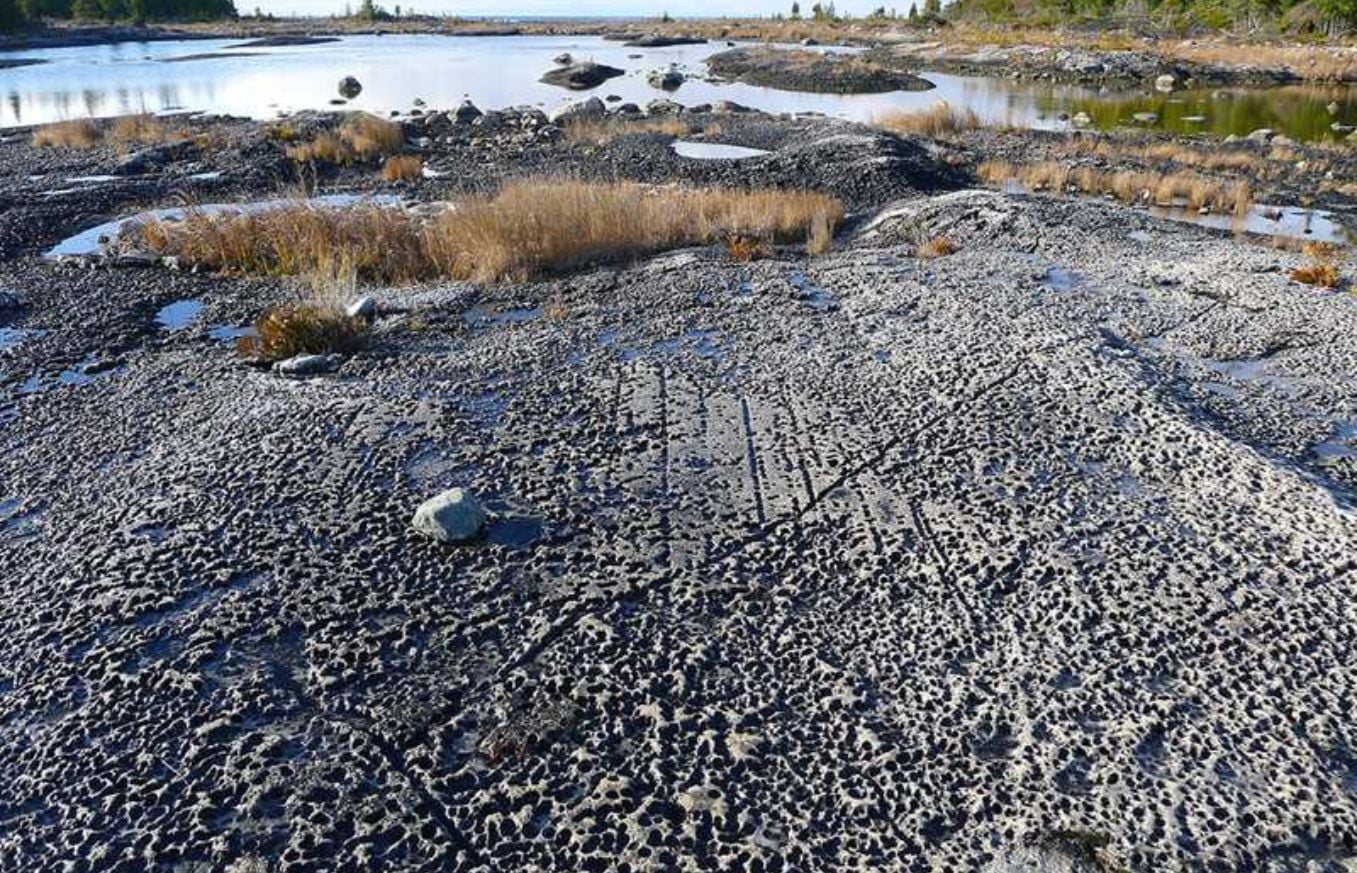
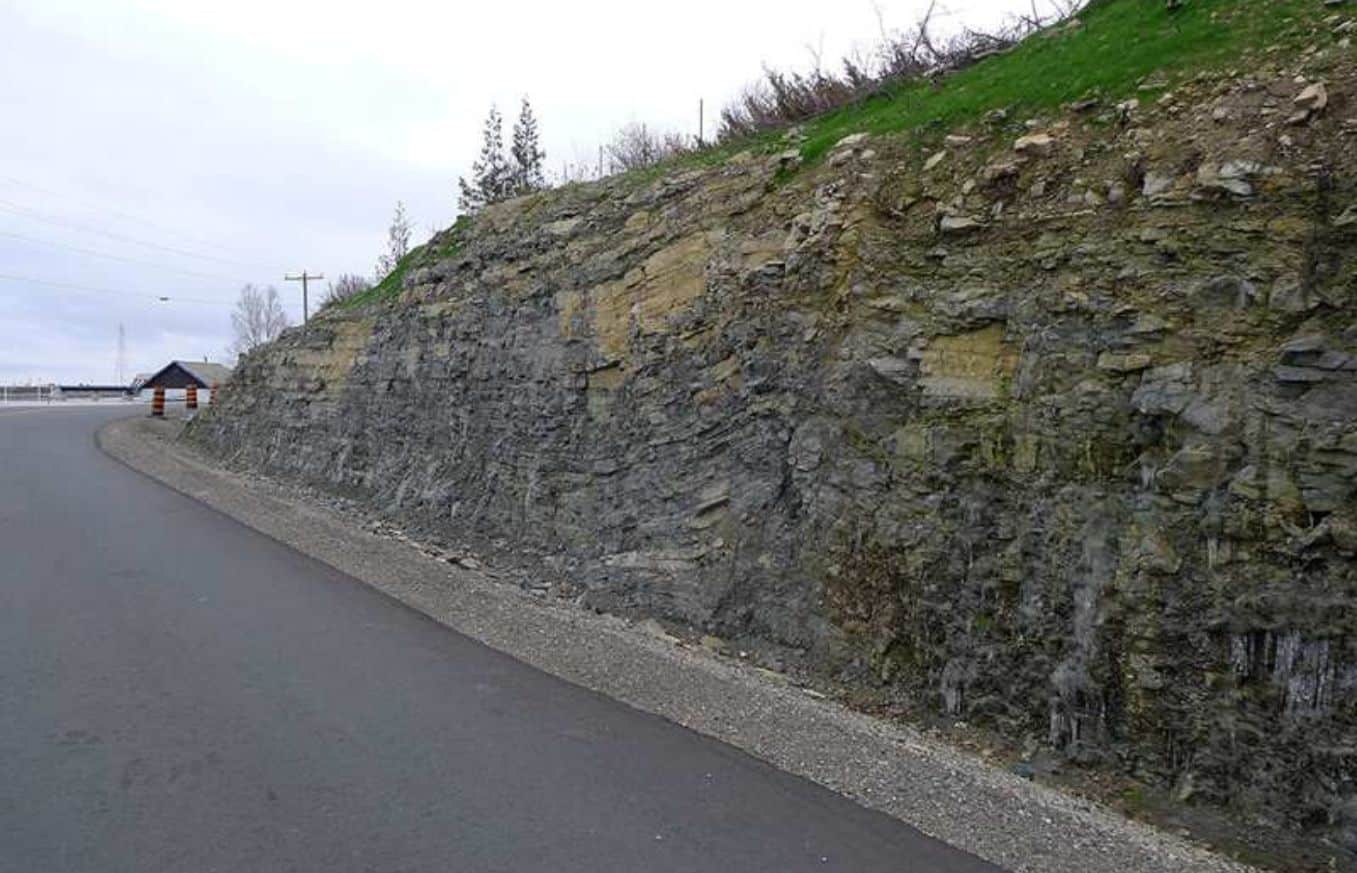
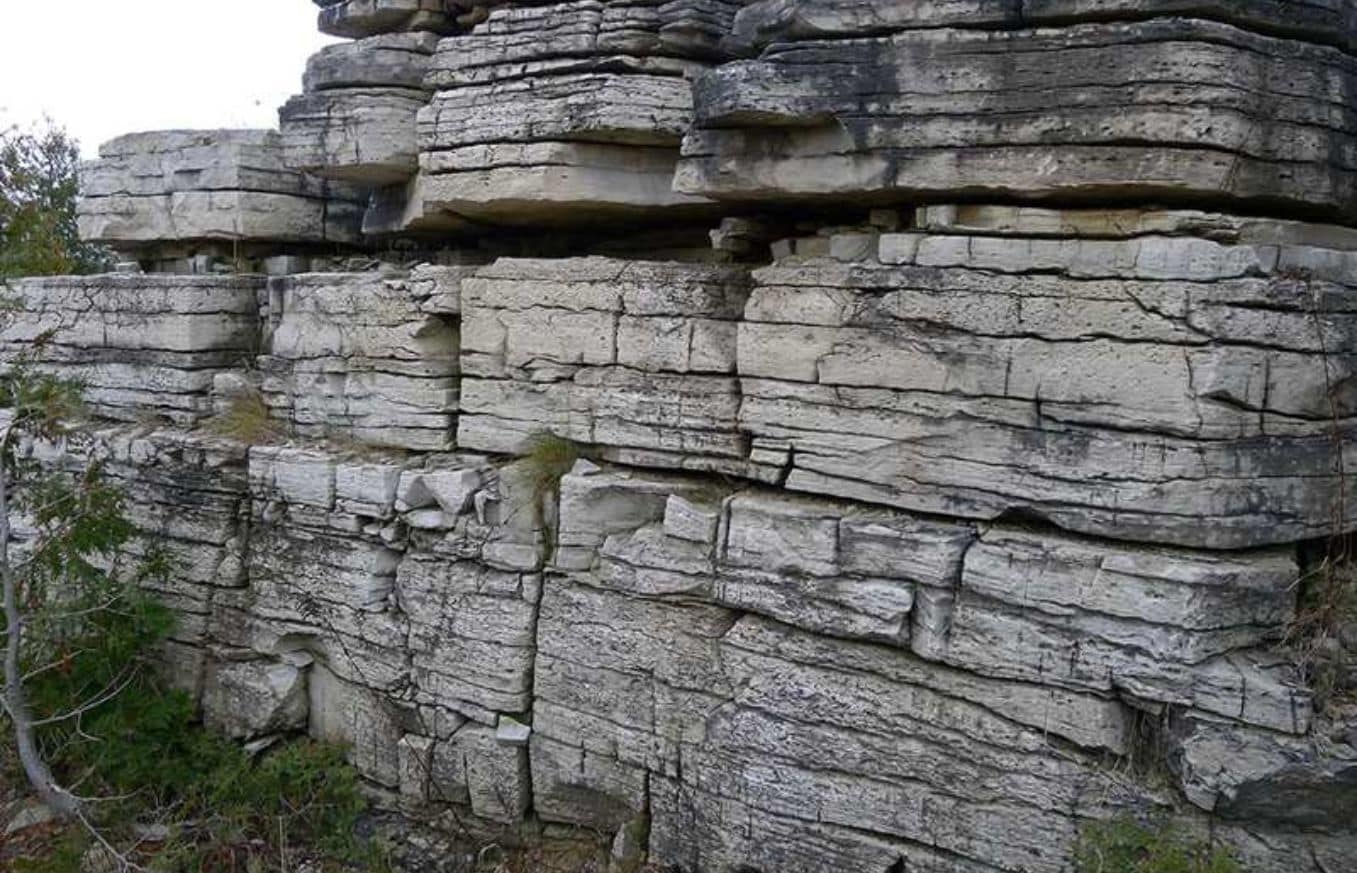
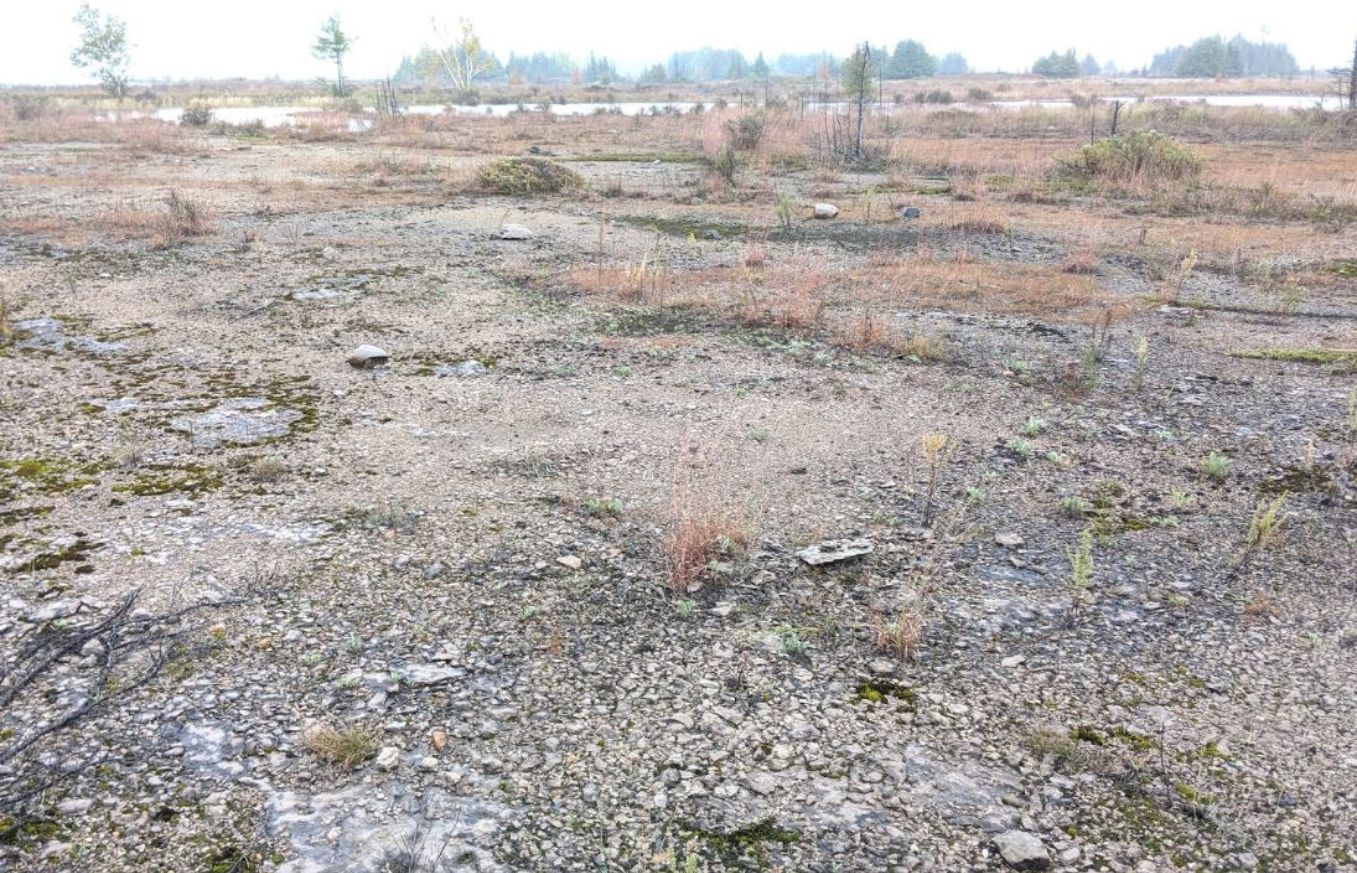
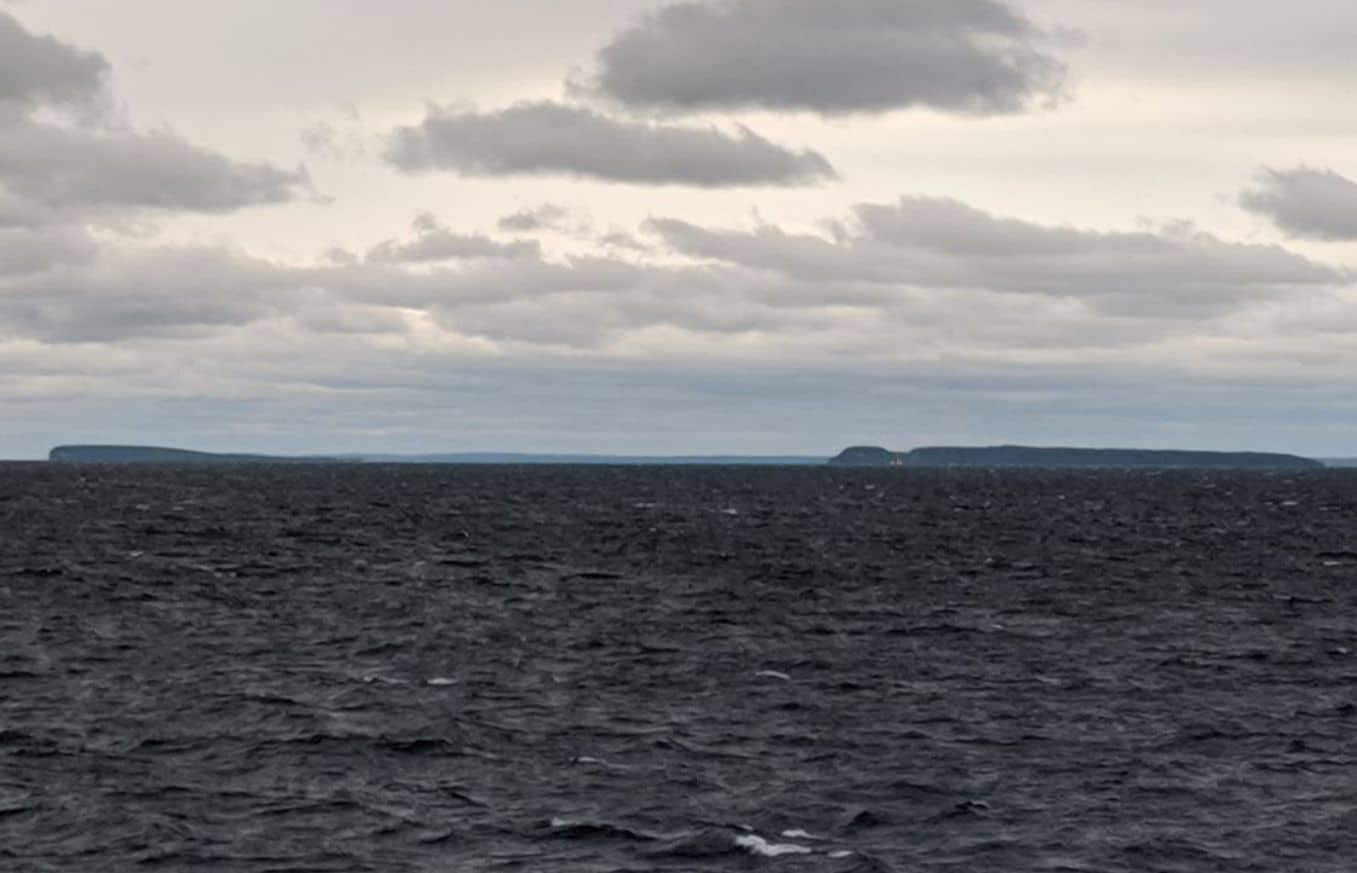
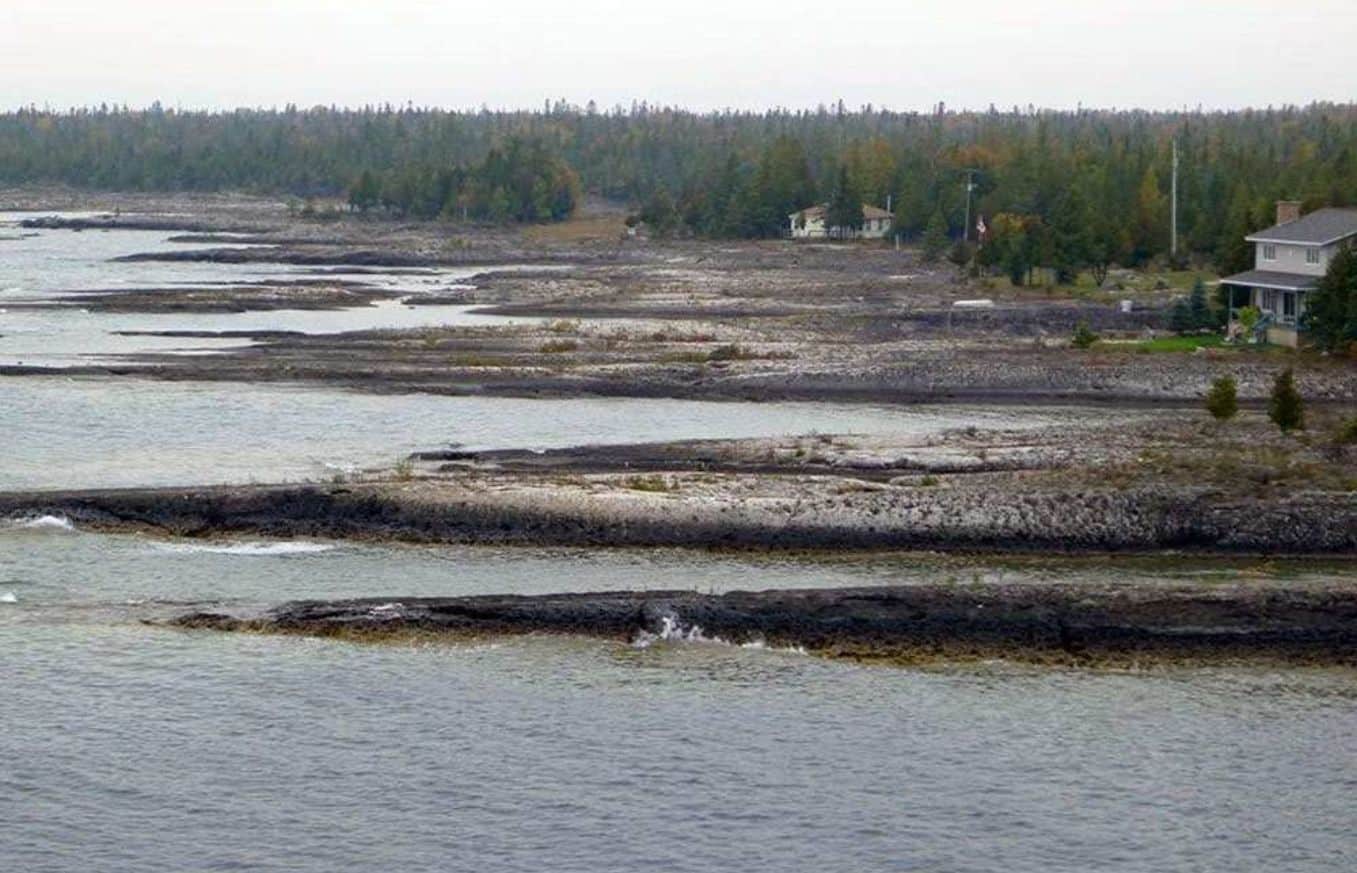
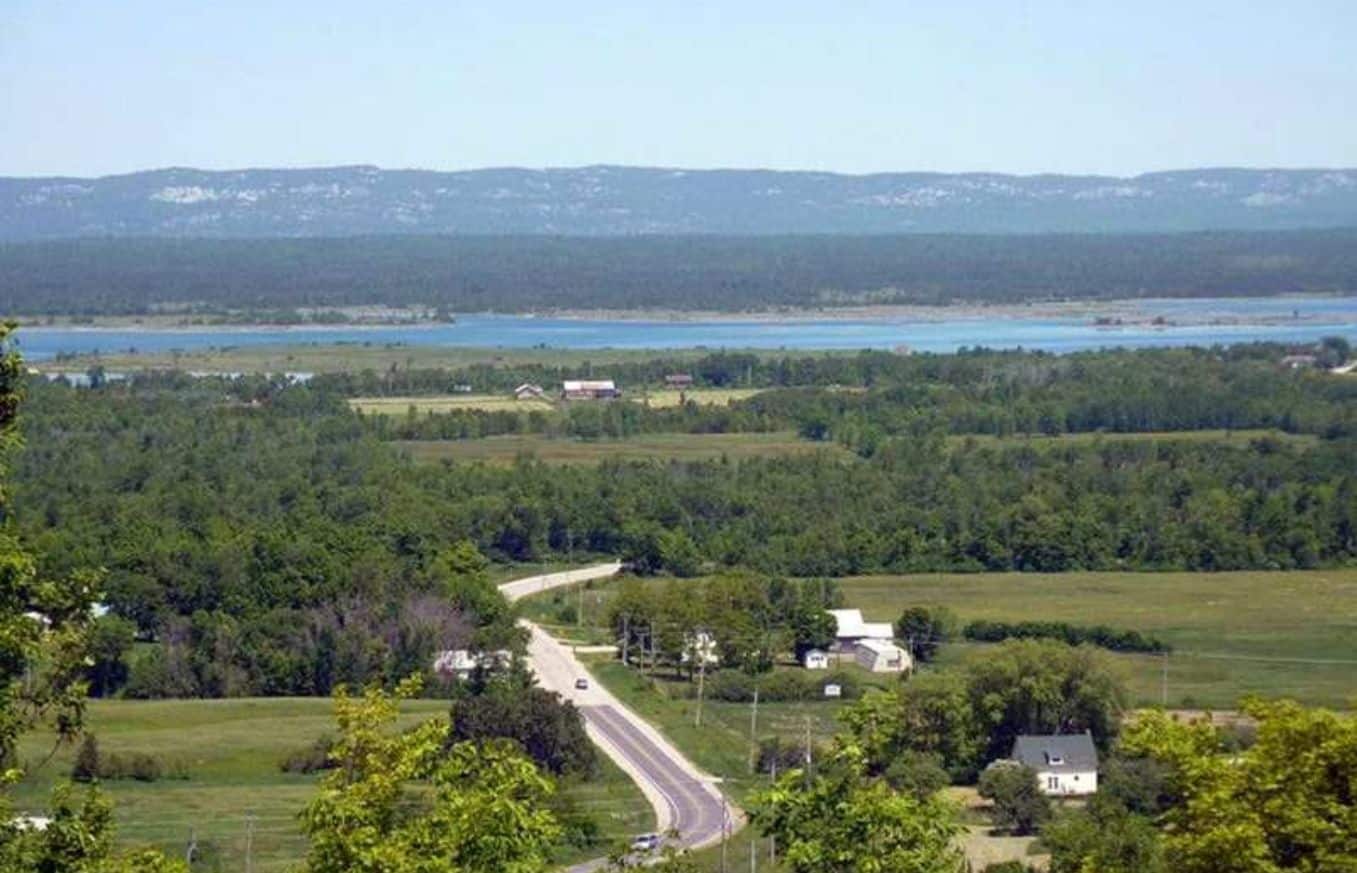
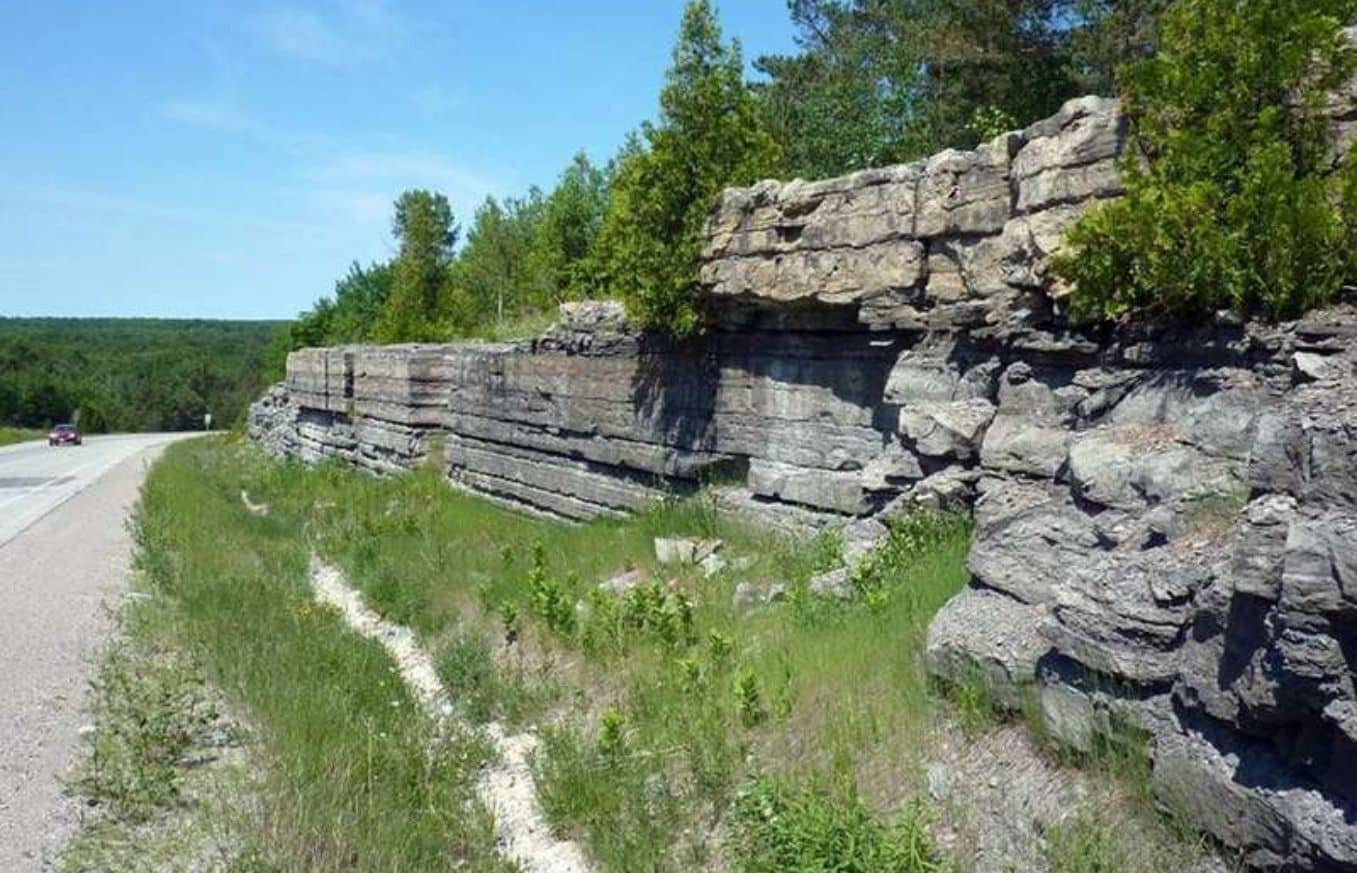
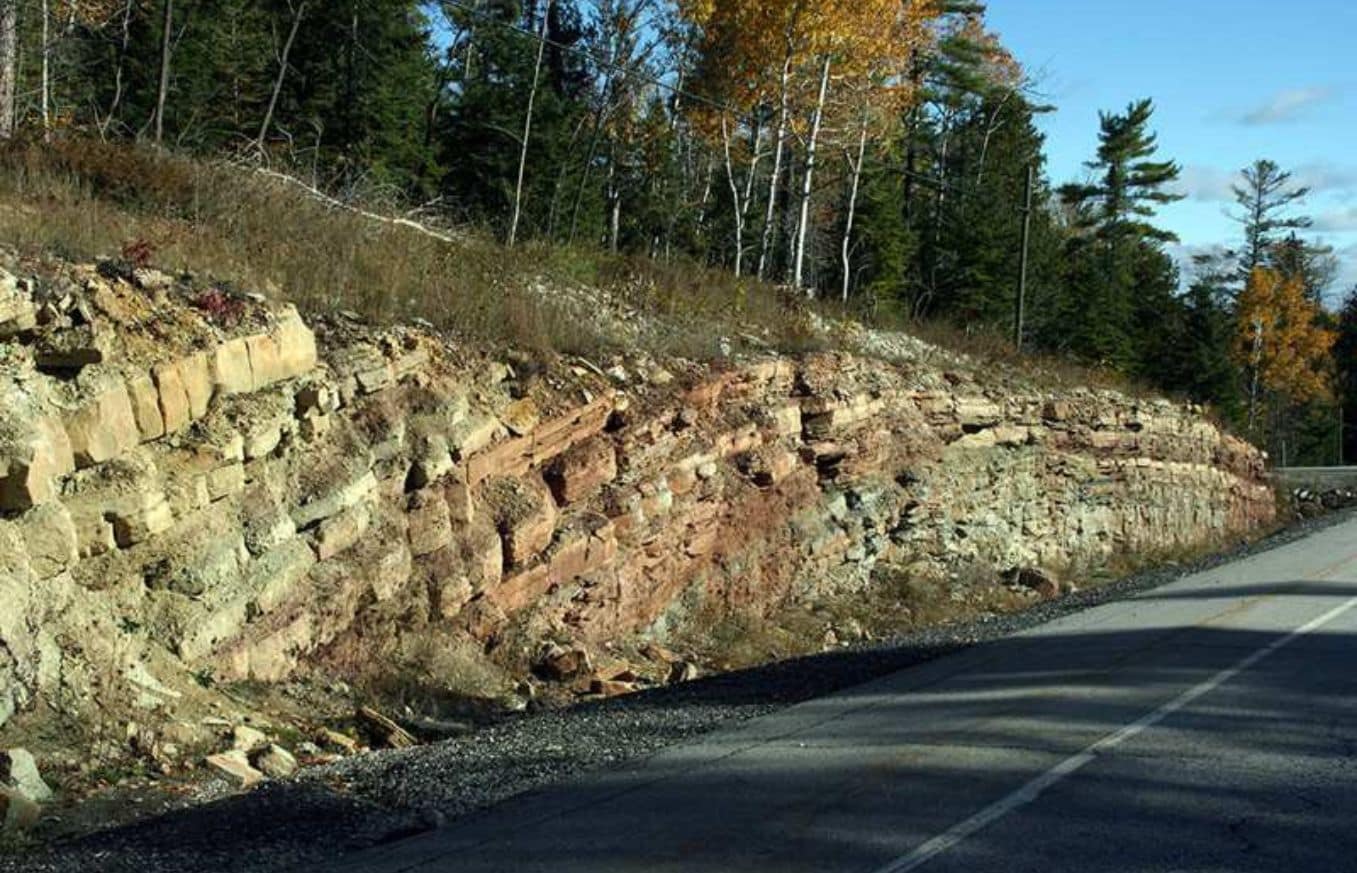
After the breakup of Rodinia, some 700 million years ago, much of North America was covered by warm shallow seas between 600 and 300 million years ago. These teemed with early marine life dominated by trilobites and ammonites living on reefs built by corals. Sea floor layers of sedimentary rocks such as fossil-rich limestones are best seen near Little Current on Manitoulin Island, the largest freshwater island in the world. The island is crossed by the spectacular cliffs of the Niagara Escarpment. Manitoulin Island is named from mnidoo mnis, meaning ‘island of the Great Spirit’ by the Odawa people.

You are here
Indigenous place-based narratives for DEEP TIME ZONE 4 are being developed in concert with Indigenous-owned creative agency Design de Plume, regional Knowledge Keepers and Georgian Bay Indigenous community representatives. To find out more or provide input please contact us.
Without a doubt, this is the most spectacular trail anywhere in Ontario; meandering up and onto the top of the glacially-sculpted Niagara Escarpment . The trails climbs up two escarpments: a lower one forming the saucer and another higher one forming the cup. Both are made of the outcropping edges of hard dolostones and limestones. The Cup and Saucer is a superb example of a 'rock drumlin ' where glacier ice flowing from the north during the last Ice Age about 20,000 years ago carved deep into the face of the escarpment . This created streamlined rock landforms that look like an upturned row boat with 'bullet-shaped' noses that point up-ice to the north. There are many such examples of rock drumlins along the length of the Bruce Peninsula from Owen Sound to Manitoulin but none are quite so spectacular as the Cup and Saucer. Smaller more elongate 'rock flutes' are also numerous. Note the large fallen blocks of rock at the base of the cliffs. Some 10,000 years ago, the cold waters of glacial Lake Algonquin lay at the base of these cliffs.
Manitoulin Island has been the site of recent controversy regarding the arrival of Indigenous Peoples in Ontario. The village of Sheguiandah, some 11 kilometres south of Little Current, is the site of a major archeological find. In the 1950s, stone tools were supposedly found under glacial till suggesting that Paleo-Indians had arrived in Ontario before the last Ice Age, well before 20,000 years ago. However, recent excavations and age-dating have shed new light on the significance of the site, telling us that the first occupation occurred 9,500 years ago when the last ice sheet was retreating from northern Ontario. Visit the museum in the Sheguiandah for more information on this intriguing site.
For learning, curriculum, and digital storytelling to be guided by community input.
As this initiative moves into a broad consultation phase, we invite open dialogue with First Nations, municipalities, communities, knowledge keepers, land stewards and partners on Manitoulin to better understand perspectives, concerns, opportunities, and to explore if and how this initiative could be shaped together — including if community-led stories and narratives may one day be shared here.
DEEP TIME’ is the themed expression of how exploring and understanding the past helps create a better future. The unique DEEP TIME story and its eight geological chapters encourages both visitors and residents to know the past, celebrate the present and help create a more resilient future for the Bay and its many communities.
2.7 billion years
Sault Ste Marie to Serpent River
The ancient mineral-rich rocks of the North Channel record the breakup of the planet’s oldest supercontinent – and the birth of the Huronian Ocean.
1.8 billion years
Serpent River to Killarney
The Group of Seven’s white rolling quartzite hills are the stumps of mountains formed when landmasses collided to form supercontinent Nuna
1.3 billion years
Killarney to Honey Harbour
The waterscape of the 30,000 Islands exposes the deep crustal roots of the immense Grenville Mountains formed when North and South America collided.
500 million years
Manitoulin Island
500 million years
Manitoulin Island
350 million years
Tobermory to Wiarton
Within the last 2 million years, the Bruce/Saugeen peninsula was scoured by Ice Age ice sheets that cut deep valleys into the face of the Niagara Escarpment such as at Owen Sound.
13,000 years
Collingwood to Wiarton
The raised beaches of glacial Lake Algonquin surround the coast of southern Georgian Bay like staircases and hosted the camps of caribou-hunting Paleo-Indians 11,000 years ago.
Last 10,000 years
Collingwood to Honey Harbour
The ancient hard rocks of the Canadian Shield meet the softer limestones of the ancient seas creating a stark contrast in landscapes, ecosystems, and a diverse cultural history unique in North America.
4,000 years to today
Waters of Georgian Bay
In 1615 Samuel de Champlain called Georgian Bay ‘La Mer Douce’ (the sweet water sea). An early map also portrays it as Karegnondi, derived from ‘lake’ in the language of the Petun First Nation.